Built for the age of AI
Agentic threat modeling, governed by design.
ThreatModeler® Nexus™ is the agentic platform for secure design. AI accelerates the work. A governed framework owns the outcome, so what ships never depends on which prompt was written or which model answered.
Threat model anywhere you work, across everything you build
Threat modeling shouldn't be tied to one tool or one stage. ThreatModeler Nexus meets your teams where they already are, and covers the whole estate, not just the code.
Anywhere you work
Meet teams where they already are
Design in the ThreatModeler platform, import from your diagramming or enterprise architecture tool, or model straight from code in the IDE. No single starting point is the right one.
ThreatModeler canvas · Diagramming tools · EA tools · IDEs & AI coding tools
Anything you build
Model the whole estate, not just the code
Applications, cloud and hybrid architectures, and devices and OT. Threat model what an IDE never sees, from connected vehicles to medical devices to critical infrastructure.
Applications · Cloud & hybrid · Devices & OT · Automotive · Medical devices · Critical infrastructure
One platform, built around a single source of truth
Everywhere you work and everything you build feeds one place. Connectors pull it in, the agents do the work, governance keeps it within policy, and it resolves to a single source of truth: the Secure Design Graph.
Connectors
Ticketing
Diagram & EA import
CI/CD
Platform MCP Server
Cloud
Agents
System Mapping Agent
Graph Agent
Reporting Agent
Governance
Deterministic framework
BYOAI
RBAC
Foundation
ThreatModeler Secure Design Graph
one source of truth
One source of truth, projected three ways: developer, architect, and CISO.
Agents that do the work, not a chatbot that describes it
ThreatModeler Nexus is an agentic platform, not an assistant or a prompt wrapper. Its agents operate on the Secure Design Graph and keep every output traceable.
System Mapping Agent
Turns documents, diagrams, infrastructure-as-code, and cloud context into a model-ready system map, so the path from design artifact to threat model is fast and repeatable.
Graph Agent
Enriches your Secure Design Graph with the components, threats, controls, and patterns specific to your business, so every future model starts from your reality.
Reporting Agent
Generates business-ready and audit-ready reports from the same governed data that produced the model, so reporting is a defensible output rather than a manual afterthought.
Other AI tools find what's there. We find what's missing.
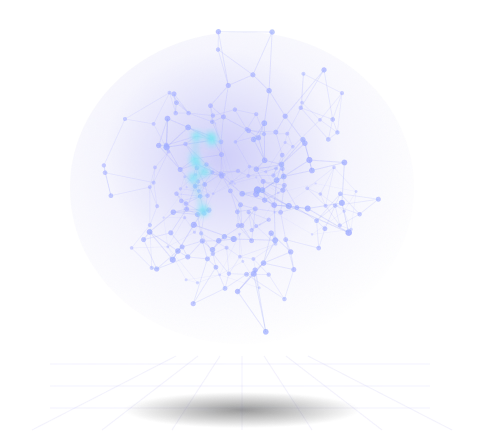
That difference is the Secure Design Graph: a connected model of how your components, threats, and controls fit your real systems and the rules you have to meet.
A prompt can generate a list. The Graph holds the relationships a list can't. And it compounds. Every threat model your teams produce makes the Graph richer, so the next model is faster and more accurate.
Three ways to bring AI to secure design
The difference isn't a better prompt. It's where the work happens, what it can find, and whether you can defend the answer.
Where it works
Design and architecture, before, during, and after the build
A prompt, on demand
Code and runtime
What it finds
What's missing, by design
An assumption-based risk list
Known vulnerabilities
Same answer
Always. Governed. Deterministic.
Varies every run
For code, not design
Provable coverage
Cross-repository, enterprise-wide
Single repository, prompt-dependent
Only the code in the repository
Board-defensible
System of record, framework-mapped
Nothing to audit
Findings, not design rationale
Bring governed threat modeling into agentic workflows
As development becomes agentic, secure design has to follow. The built-in MCP Server connects ThreatModeler Nexus to the tools and agents where systems are built and changed.
Earlier
From documents
Turn PRDs, architecture docs, and policies into living threat models before a line of code exists.
Invisible
In the IDE
Developers create and maintain models from the repository, inside the AI coding tools they already use.
Seamless
In CI/CD
Every pull request is checked against the model automatically, with governance enforced on every change.
Scalable
Across the portfolio
Security leaders query models, requirements, and control gaps to focus investment where it cuts the most risk.
Enterprise capabilities and governance, built-in
A prompt gives you an answer. ThreatModeler Nexus gives you an operating model. This is the part you can't get from a prompt or a markdown file.
Governed, deterministic outcomes. The same architecture in produces the same threats and controls out.
Traceability and audit-ready evidence. Every decision traces back to architecture, controls, and compliance requirements.
Enterprise scale and reuse. Component reuse, templates, and the nesting and chaining of models across thousands of systems.
Methodology and framework support. Established methodologies including STRIDE, PASTA, and the CSA's MAESTRO for agentic systems, with control mapping to NIST, ISO 27001, PCI DSS, HIPAA, DORA, and the EU AI Act.
Control of your AI. Bring your own model; the platform's agents still operate under one governance.
Results from regulated, large-scale programs
Backed by the Threat Research Center: more than a decade of curated research and 13 granted patents behind every threat model, control, and compliance report.
50%
less threat modeling effort, Charles Schwab
5×
faster threat models, kept to the speed of the sprint
10×
more models produced: global financial-services trading platform securing 6M+ trades a day
Sources: Charles Schwab case study (50% less effort); regulated healthcare provider (5× faster); global financial-services trading platform (10× model production).

See what could go wrong, before it does.
